Table Of Content
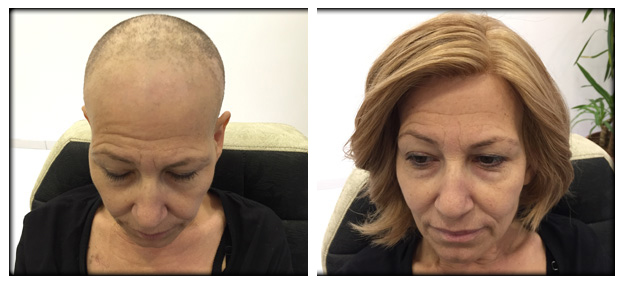
Avoid hairstyles like tight buns and braids that pull on your scalp, potentially causing traction alopecia. Alopecia areata is an autoimmune disease that causes hair to fall out in nickel- or quarter-size patches. “Your body’s immune system is attacking the hairs,” Brodell says. “As soon as you notice hair loss is happening, you should come in,” says Lauren Eckert Ploch, a dermatologist in Aiken, South Carolina.
Jill Martin Shares Videos While Trying on Wigs After Chemo Hair Loss - PEOPLE
Jill Martin Shares Videos While Trying on Wigs After Chemo Hair Loss.
Posted: Thu, 28 Dec 2023 08:00:00 GMT [source]
Hair loss during treatment
“I had six months of chemo and a full mastectomy and reconstruction. As a man it doesn't really bother me and my wife quite likes my bald head. Whatever you choose to wear remember you can experiment with different colours and patterns depending on your outfit and what you will be doing that particular day.
What lifestyle changes can help me avoid prostate cancer?
Agents more likely to cause hair loss include Cytoxan (cyclophosphamide), Ifex (ifosfamide), and Busulfex (busulphan). The platinum metal salts, such as Paraplatin (carboplatin) and Platinol (cisplatin), are less likely to cause hair loss. A scarf or hat when you go outside will shield you from the cold.
Is it possible to prevent hair loss during chemo?
Make sure you hold your fingers to keep it in place and you have got head covering. Chemotherapy drugs that cause hair loss can cause other hair to fall out too. This includes eyelashes, eyebrows, underarm, leg and sometimes pubic hair. Some normal cells in the area being treated can also be damaged by radiotherapy.
You and someone else taking the same drug for the same cancer can still lose different amounts of hair. It is a common misconception that all cancer treatments cause hair loss. Whether or not your hair is affected by cancer treatment depends on the type of treatment and the dose. Before you begin treatment, ask your doctor if the recommended treatment plan can cause changes to your hair. The American Cancer Society (ACS) notes that it can be hard for doctors to predict who will and who will not have hair loss due to chemotherapy.

Your scalp may feel very sensitive to washing, combing, or brushing. But hair often starts to grow back even before treatment ends. The cold makes the blood vessels in the skin of your head narrower.
Some people worry their cancer might spread to the scalp (metastasise) if they’ve used a cold cap during chemotherapy. Researchers did a systematic review of studies in 2018. The review showed a very small risk of cancer spreading to the scalp after using a cold cap.
Sometimes, depending on the dose of radiation to your head, your hair may grow back differently from how it looked before, or it may not grow back at all. So, you might find scarves to be both a more comfortable and practical option. The most important thing is to figure out what works best for you.
About Hair Loss and Your Cancer Treatment
The MIRASOL trial was required by FDA to confirm that the drug could indeed provide clinical benefits, including improving survival. AARP is a nonprofit, nonpartisan organization that empowers people to choose how they live as they age. Generally speaking, the sooner you start treatment, the more options you have and the better your results, dermatologists say. Sister Wendy Davies, manager of the Chemotherapy Day Centre, said the additional machine would greatly benefit patients.
Hair loss can be an outward symbol to others that you have cancer and are undergoing treatment. Talking with your care team about your concerns and taking steps to prepare for the possibility of hair loss may be helpful. There are ways to help minimize the distress losing your hair during chemotherapy treatment causes. Minoxidil (Rogaine) is a drug approved for hair loss. This drug is not likely to prevent hair loss if used before and during chemotherapy. It may speed up hair regrowth after chemotherapy, but data is currently limited, and more research is needed to understand if it is effective.
Scalp hypothermia is treatment to make your scalp very cold. During your chemotherapy infusions, a closely fitted cap that's cooled by chilled liquid can be placed on your head. This way, chemotherapy medicines are less likely to affect your hair. Your healthcare team can tell you whether your chemotherapy treatment is likely to cause hair loss. This allows you to plan for head coverings or treatments to reduce hair loss. A cold cap is a hat that is worn during some chemotherapy treatments.
From straight to curly, thick to thin: here's how hormones and chemotherapy can change your hair - The Conversation
From straight to curly, thick to thin: here's how hormones and chemotherapy can change your hair.
Posted: Thu, 11 Jan 2024 08:00:00 GMT [source]
Cancer cells tend to divide very quickly—at a much higher rate than most of the cells in the body. They ignore the signals and mechanisms that tell normal cells to stop dividing. Customized ready-made wigs can be made of human hair, synthetic blends, or a mixture of both.
By Julie Scott, MSN, ANP-BC, AOCNPScott is an Adult Nurse Practitioner and freelance health writer with experience in oncology and hematology. Not all anti-tumor antibiotics will cause hair loss. Among these, Adriamycin (doxorubicin) and Idamycin (idarubicin) are more likely to cause hair loss. Boston's WCVB TV Channel 5 reporter Kelley Tuthill shares tips for selecting a wig and wearing it with confidence. For more information about where to buy wigs and hairpieces, read our resource Where to Buy Wigs and Hairpieces. Losing your hair can cause more than a change in your physical appearance.
If you’re starting to lose your hair, it’s important to see your dermatologist (skin doctor). They can help you figure out the reason for your hair loss and answer any questions you may have about your hair. Your dermatologist will ask about your history of hair loss and look at the areas where you’re losing your hair. Hair loss continues through treatment and even up to a few weeks after treatment ends. Hair regrowth usually starts about six to eight weeks after treatment is completed. The new hair may have a different texture or color.
It’s normal to feel anxious, depressed, or self-conscious about losing your hair. And women often have a harder time with it than men. A support group can connect you with others going through the same thing. As you lose your hair, your scalp may get tender or itchy. A moisturizing shampoo and conditioner can help, as will a gentle lotion you massage into your scalp.
Here are some frequently asked questions about chemotherapy and hair loss. It is important to note that hair regrowth may be different for each person. Wash your hair as little as possible, and use gentle products. Wear a hat or scarf to protect it from heat and cold, and apply a sunscreen with a sun protection factor (SPF) of at least 30 every day. And if your scalp itches or feels sensitive, go easy with your brush or comb.


No comments:
Post a Comment